Person standing by the shoreline, gazing out over the water.

Advancing our vision

Centre for Cancer Prevention and Support

Centre for Cancer Prevention and Support

There is a significant gap between new research findings and what is used in clinics, hospitals, and communities. Many promising innovations do not move beyond academic research because of barriers related to adoption, implementation, and long‑term sustainability in real‑world settings. 

The Centre for Cancer Prevention and Support (CCPS) plays a unique role as a connector, convener, and catalyst to close this gap. We bring together researchers, people living with cancer, caregivers, community partners, healthcare providers and decision-makers to turn evidence into practice across cancer prevention, treatment and support. Our work is guided by principles of social innovation and knowledge mobilization, recognizing that meaningful progress is shaped not only by evidence, but also by context, collaboration, and community knowledge.  

A key part of this is knowledge mobilization, making research findings practical, usable, and accessible so they can inform decisions, programs, and care in practice. We focus on supporting innovations that can be adopted by those who use them and sustained over time to deliver practical and lasting impact for people and their communities. 

What we do

We work directly with researchers, partners, and communities to translate evidence into accessible formats that can be adopted in practice. Through targeted incentives, guidance, and capacity‑building pathways, we support uptake of proven practices beyond academic settings. 
Equity guides how we prioritize and shape our work. We work with communities affected by cancer inequities and apply human‑centered design to ensure solutions reflect lived experience and fit diverse local realities. 
As a national team, we connect partners across research, practice, policy, and community to break down silos in the cancer system. These connections enable collaboration, shared learning, and coordinated action across regions and sectors.
We identify innovations with strong potential to improve cancer prevention, detection and care and focus resources where they can make the greatest difference. Through targeted support and progression pathways, we help promising solutions move forward toward scale and long‑term impact across Canada. 

How we make a difference

These key initiatives are just some of the ways we make a difference through our work. 

CDL Cancer stream

Through the Canadian Cancer Society’s partnership with Creative Destruction Lab (CDL), the CDL Cancer stream offers researchers and clinicians mentorship on how to commercialize oncology research. The program connects early-stage start-ups with experienced entrepreneurs, investors, clinicians, scientists, and patients, providing practical guidance in clinical strategy, business development, and go‑to‑market planning to advance innovations in early detection, treatment, and quality of life. 

Innovation challenges

An innovation challenge is a public call for ideas, solutions, or technologies that invites a wide range of people, individuals, teams, organizations, or communities to help solve a specific problem. At the Canadian Cancer Society, we use innovation challenges as a way to crowdsource creative, practical, and community driven solutions to complex health issues, such as improving access to cancer screening in rural and remote areas.

Cancer Prevention Research Network

The Cancer Prevention Research Network (CPRN) is a nationwide initiative of the Canadian Cancer Society that brings together researchers, community partners, policy specialists, healthcare practitioners, and people living with cancer and caregivers. With over 220 members from across Canada, the network supports collaboration and knowledge mobilization to accelerate the adoption and impact of primary and secondary cancer prevention research in practice, policy, and community settings.

Virtual cancer care resources

The virtual cancer care resources were co-designed with and for people living with cancer, caregivers and healthcare providers. They include practical tips and tools to help people feel better prepared and more confident using virtual care, such as phone, video and secure messaging, including email, text and online chat.

Grand prize winner of the Rural and Remote Community Cancer Screening Challenge

[Speaker speaking at a podium.]

(0:00) Words on screen: It’s my immense pleasure to announce that the grand prize winner of the Rural and Remote Community Cancer Screening Challenge is Gateway Centre of Excellence in Rural Health in Goderich, Ontario.

[The camera pans out as the audience applauds. The speaker remains at the podium. The screen transitions to the grand prize winner standing in a building lobby.]

(0:15) Words on screen: So, our population is older, and traditionally, people would seek out their medical advice at a physician’s office. But in our region, over 20,000 people within two of our counties do not have a family physician. So, I think our strategy is to help get the information out there without them relying on that primary care provider. And we’re going to meet the people where they are at in their safe

[Over-the-shoulder view of an individual looking at medical imaging displayed on a computer monitor. A physician discusses medical imaging with a patient. Aerial footage shows rural farm fields. The video returns to the grand prize winner standing in the lobby. An individual speaks into a microphone to a room of attendees as the camera pans across audience members.]

(0:46) Words on screen: environments outside of a clinical setting. We are going to work really hard to make our project scalable across Canada for sure. And I think that, you know, other communities, if they meet their people at their level and introduce the ideas and the screening concepts at local events, health fairs and things that are happening, that we can reach a lot more people on that one to one. We’re so thrilled to be working with the Canadian Cancer Society and receiving this funding, which will

[Cancer Trials Canada informational card. An individual stands beside a large television monitor displaying a presentation. Another individual presents to an audience in a room with a suspended television monitor displaying presentation content. An upward column transition reveals another presenter speaking to fire personnel in a fire hall garage with a large screen displaying presentation slides. Two individuals stand on opposite sides of an informational booth, both looking toward the camera. The video returns to the grand prize winner in the building lobby. A group of individuals, including the grand prize winner, stand behind an informational table beside an escalator.]

(1:16) Words on screen: incredibly help a charity like ours to really deliver the message to our rural residents that screening is so imperative.

[The camera gradually zooms in on the group standing behind the informational table beside the escalator. The video returns to the grand prize winner speaking in the building lobby as people walk in the background. A green rectangle displays the MaRS logo beside the Canadian Cancer Society logo, separated by a white vertical line.]

Our impact

CDL Cancer stream
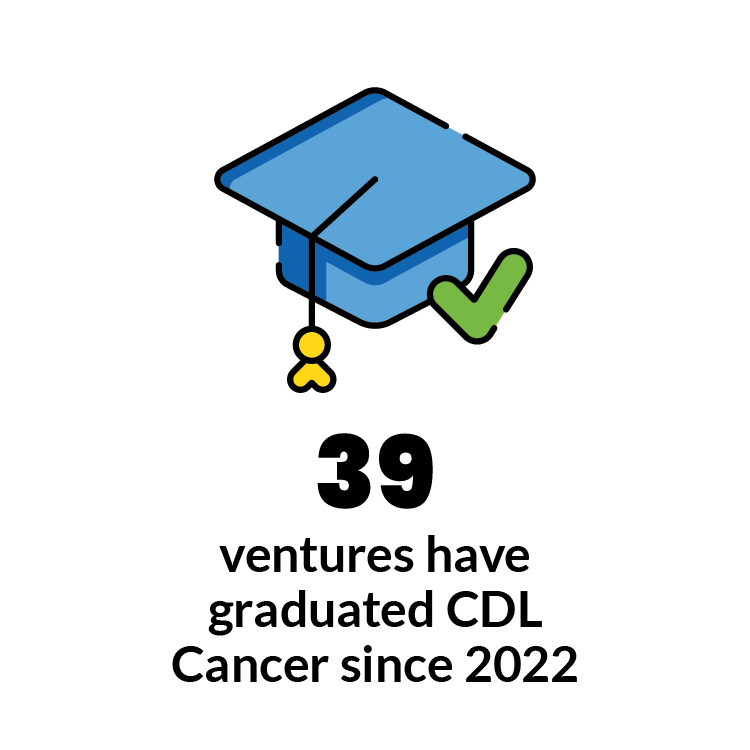
39 ventures have graduated CDL Cancer since 2022. 39 ventures have graduated CDL Cancer since 2022.
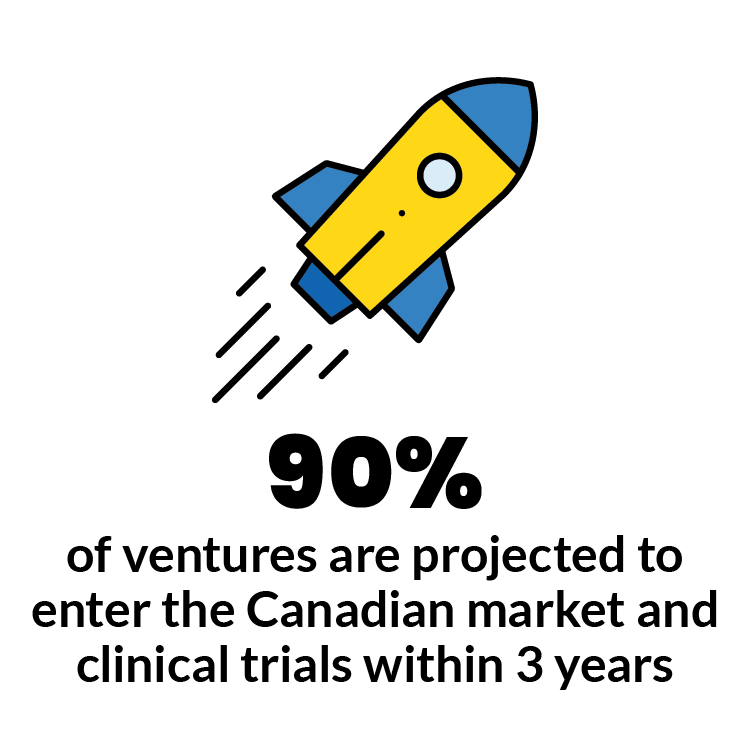
90% of ventures are projected to enter the Canadian market and enter clinical trials within 3 years. 90% of ventures are projected to enter the Canadian market and enter clinical trials within 3 years.
Cancer Prevention Research Network
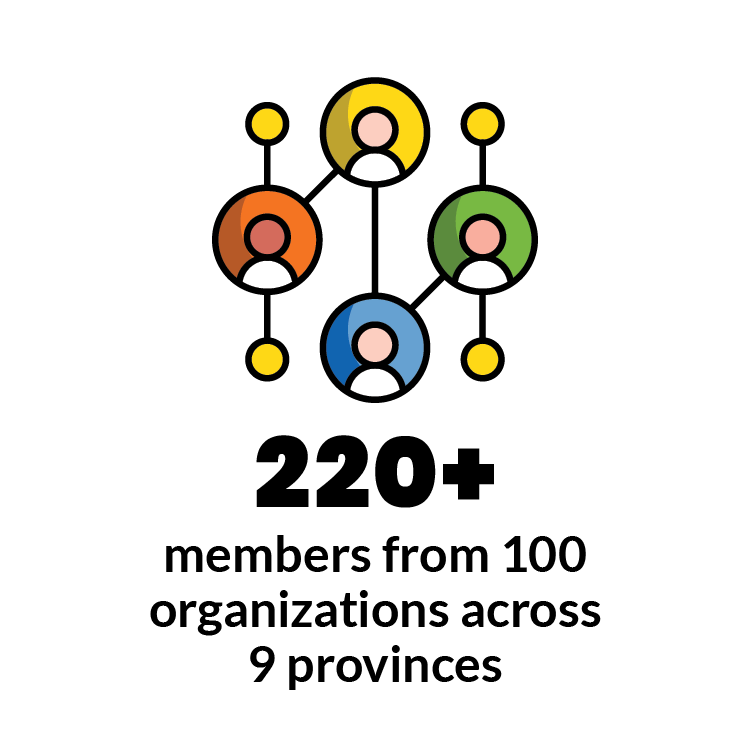
220+ members from 100 organizations across 9 provinces. 220+ members from 100 organizations across 9 provinces.
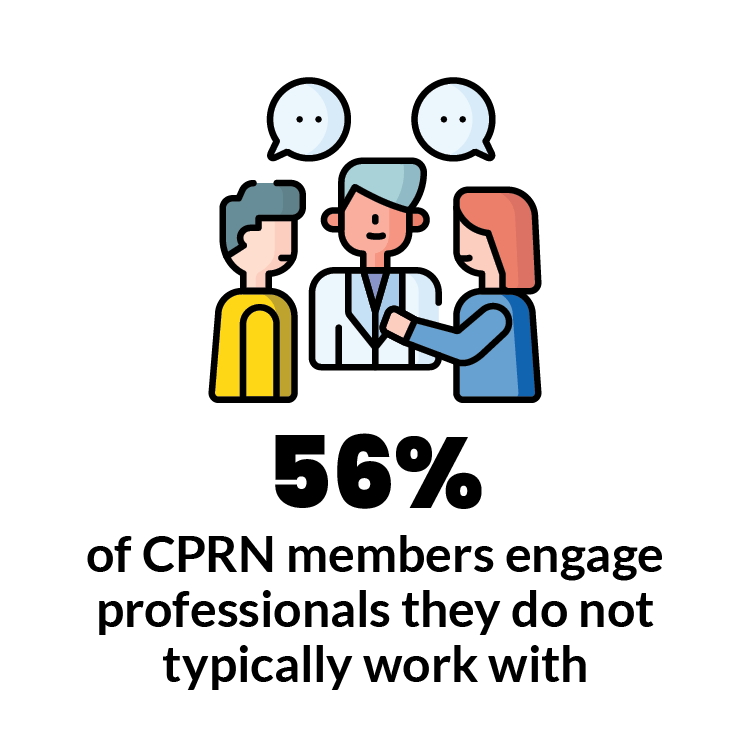
56% of CPRN members engage professionals they do not typically work with. 56% of CPRN members engage professionals they do not typically work with.
Virtual cancer care resources
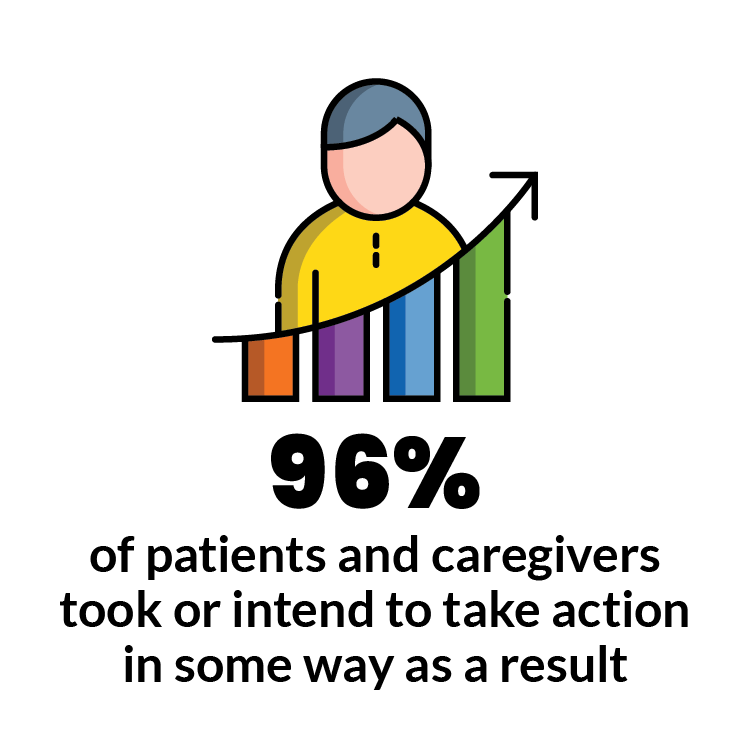
96% of patients and caregivers took or intend to take action in some way as a result. 96% of patients and caregivers took or intend to take action in some way as a result.
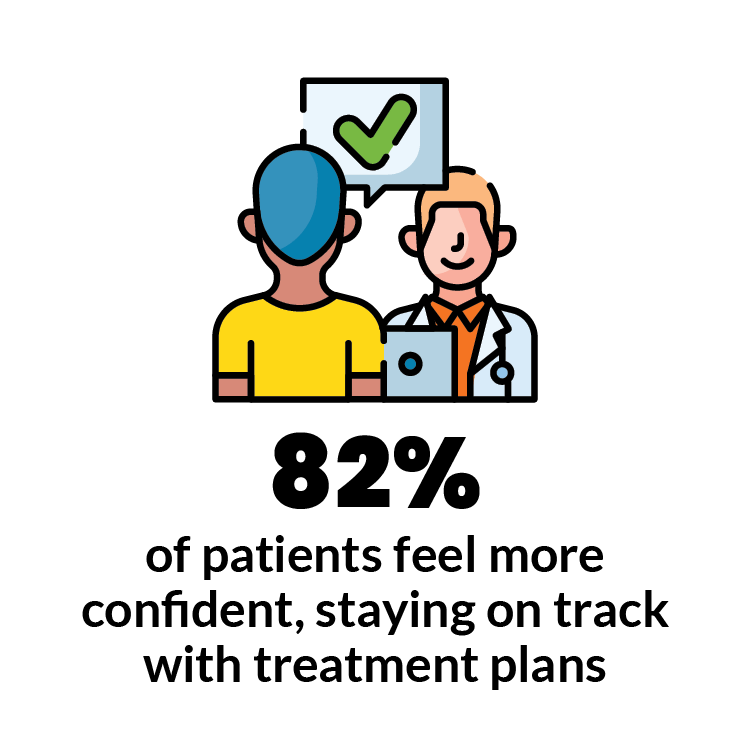
82% of patients feel more confident, staying on track with treatment plans. 82% of patients feel more confident, staying on track with treatment plans.
Innovation Challenges
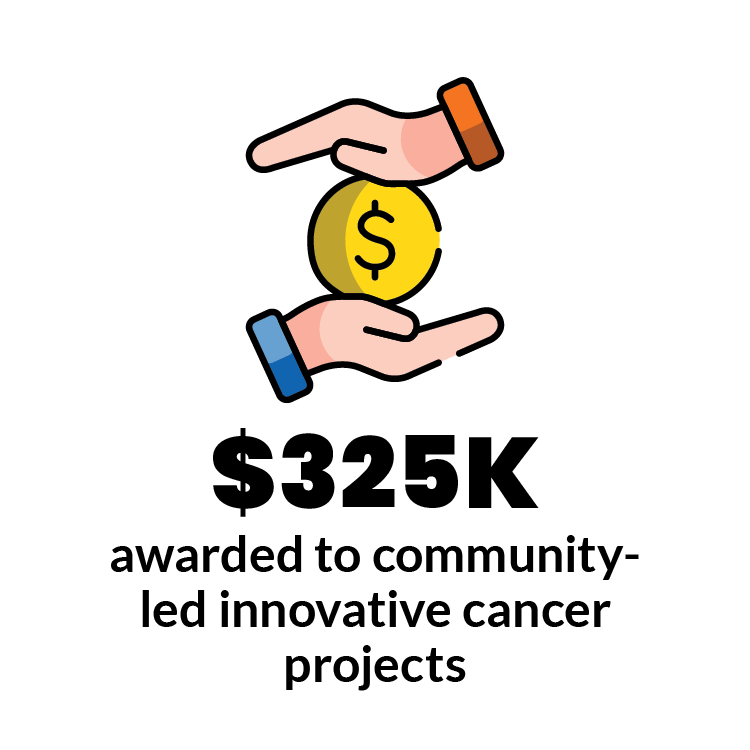
$325K awarded to community-led innovative cancer projects. $325K awarded to community-led innovative cancer projects.
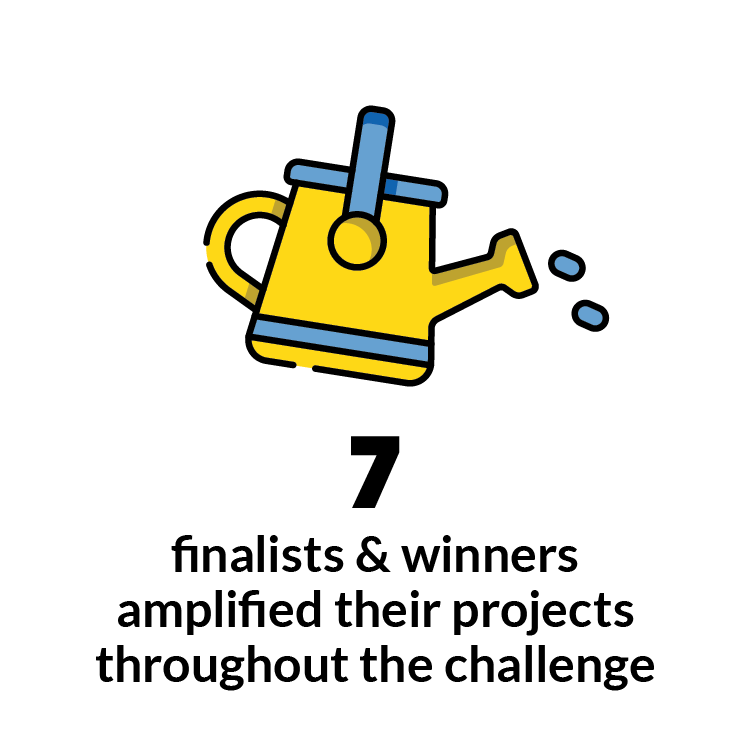
7 finalists & winners amplified their projects throughout the challenge. 7 finalists & winners amplified their projects throughout the challenge.

Artificial intelligence in cancer care

In 2023, the Canadian Cancer Society partnered with the Montreal University Hospital Centre (CHUM) School of Artificial Intelligence in Healthcare (ÉIAS) to co-develop an educational program to promote the integration of artificial intelligence (AI) into cancer care in Quebec. Through this program, experts in applying AI in oncology were able to hone their ability to pass on their know-how to their peers, to medical teams, and to patients. The project focused on building expertise and a community of practice to support the use of AI in oncology, with the goal of improving cancer prevention, detection, and the personalization of treatments through knowledge mobilization. 

Help fund world-leading cancer research

With almost half of all Canadians expected to face a cancer diagnosis in their lifetime, the urgency for funding is at an all-time high. Research holds the key to transforming the future of cancer.

If everyone reading this joins our monthly donor community today, we can keep up the momentum for life-changing discoveries to better detect, diagnose and treat all types of cancer.

Please donate today because every contribution counts.