
It has no colour, no odour and no taste. It can attach to dust and other substances in the air we breathe.
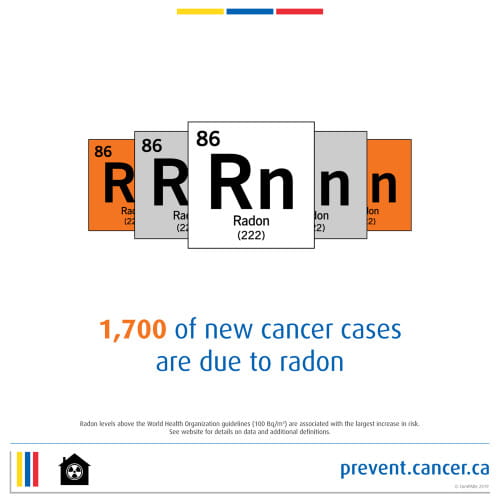
We may not be able to see, smell, or taste radon, but it’s critical to be able to detect it. Understanding what radon is – and how we’re exposed to it – can protect our health and make a life-changing difference for Canadians each year. Released this year, the Canadian Population Attributable Risk of Cancer (ComPARe) study found that about 1,700 of new lung cancer cases are due to radon.
Are you familiar with radon and how it can affect your health? Learn more about where this gas is most commonly found and why it can be dangerous:
At the Canadian Cancer Society, we’re here to help educate Canadians about cancer-causing substances and potential exposure to them. By understanding where radon can be found and how it can be harmful, people across Canada can continue to make informed decisions that protect the health of themselves and their families.