
Results of the 2026 Challenge Grants Competition
The grants provided through the 2026 Challenge Grants Competition support cancer research projects across the cancer continuum and across disciplines, with an ultimate goal of solving a problem (i.e., a “challenge”) in cancer that is meaningful to people affected by or at risk of cancer. Applications from the four pillars of health research (biomedical; clinical; health services; and social, cultural, environmental, and population health) were welcomed.
We are pleased to announce the results of the 2026 CCS Challenge Grants competition:

Expert Review Process
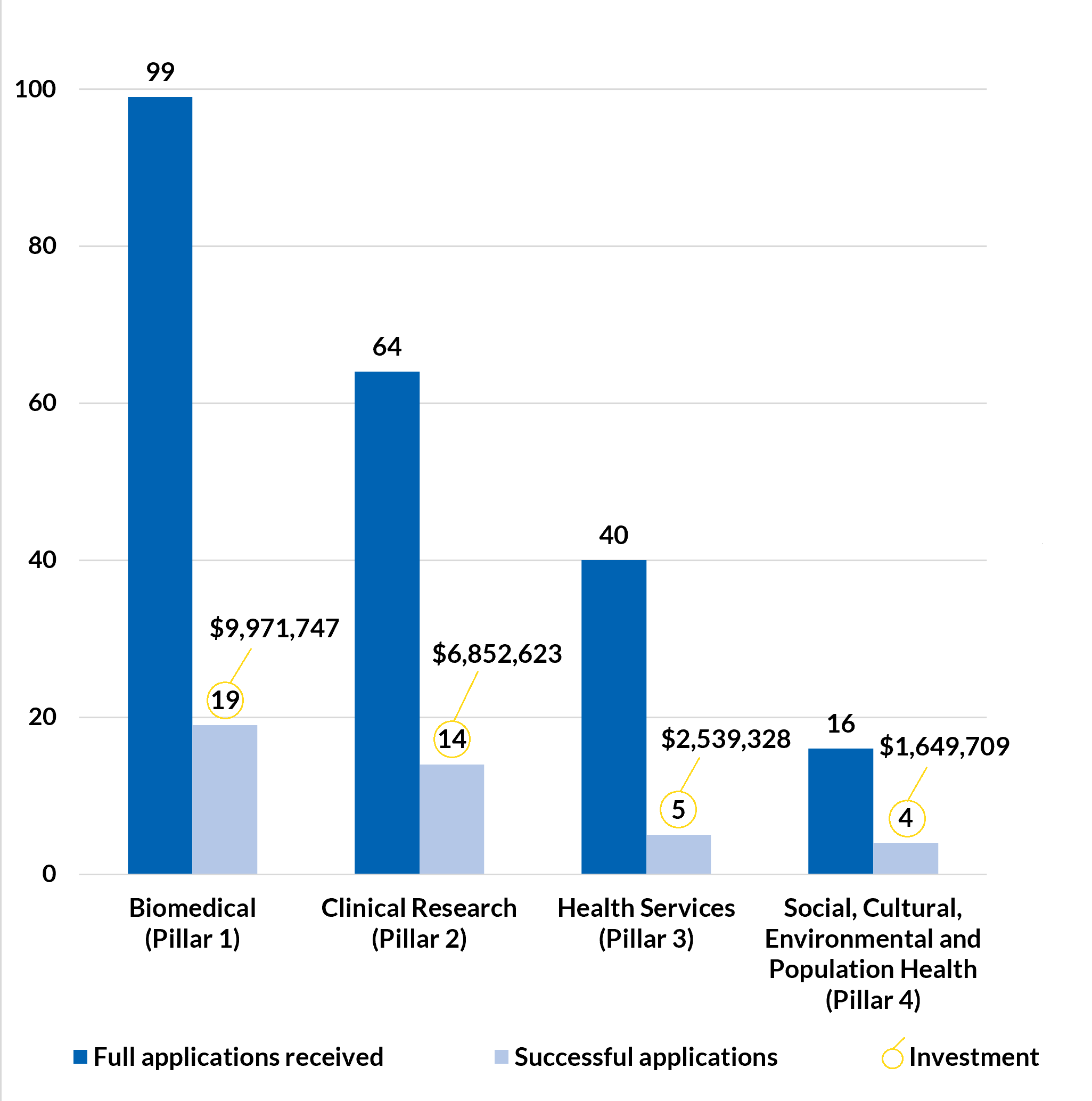
325 abstracts were received and 302 were invited to submit a full application. 220 full applications were received and 218 were reviewed across 7 expert review committees composed of scientific experts and patient/survivor/caregivers with lived experience. 42 have been approved for funding – corresponding to a 19% success rate from the full application stage. These projects total over $21 million in funding over the full term of these grants.
The 7 review panels were divided into the following thematic areas:
- Mechanisms of risk, initiation, and progression
- Molecular biomarkers
- Imaging & technology
- Therapeutics
- Immunotherapy
- Prevention & Supportive Care
- Health Services & Policy
View the Recipients of the 2026 Challenge Grants

Pillar 1

Pillar 2

Pillar 3 & Pillar 4
Patient Engagement in Research
Engaging people affected by cancer and other community members in research and funding decisions is central to CCS’s research funding approach. Here’s how our grantees are engaging with people affected by cancer in their research:
Interacting with people who live with cancer is very stimulating and helps align research questions to patient priorities, even in non-clinical research. It makes us aware of the real-life impact of cancer therapies not only on tumour control, but on tolerability, autonomy and daily functioning. It will also help disseminate our findings to the community in language that everyone can understand.
— Sylvain Meloche, A new treatment for aggressive nerve tumours
Université de Montréal – Montréal, QC
Working directly with people who have lived or living experience of cancer has reminded us that behind every statistic is a person, a family and a deeply personal story. Their experiences have helped us better understand the fear, uncertainty and practical challenges women may face, and they continue to guide us in building a program that is compassionate, culturally respectful and responsive to what women truly need.
— David Busolo, Helping Arabic-speaking refugee women access breast cancer screening
University of New Brunswick – Moncton, NB
Working directly with people who have experienced HPV-associated oropharynx cancer has helped us understand that success is not only about curing the disease. Patients have emphasized how much swallowing, eating, speaking, returning to work and spending less time travelling for treatment matter to them and these priorities have shaped every part of this project.
— Houda Bahig, Shorter radiation treatments to lessen long-term side effects
Centre de recherche du CHUM – Montréal, QC
Investment by research area
Investment by cancer site

Results by province
